
Peridot: The Gem Born in Volcanoes and Found in Meteorites
By the gemologist team at The Natural Gemstones Company. Last reviewed: 12 November 2026.
What is peridot? Peridot is the gem-quality form of the mineral olivine, and it is always a shade of green, from yellowish green to rich lime. It is one of the three birthstones for August, alongside spinel and sardonyx. Peridot forms deep inside the Earth, in the mantle, and is carried up by volcanoes, and the same mineral has been found in pallasite meteorites that fell to Earth from space. Few gems have an origin story that reaches from the Earth’s mantle to the asteroid belt, and few offer such large, clean stones at an accessible price.


How Does Peridot Form?
Peridot is the same mineral as the olivine that makes up much of the Earth’s upper mantle. According to the Gemological Institute of America, gem peridot forms at depth and is brought to the surface in volcanic rocks such as basalt, and it also occurs in pallasite meteorites, a rare type of stony-iron meteorite where olivine crystals are held in metal.
Is Peridot Really Found in Meteorites?
Yes. Pallasites are a rare group of meteorites made of olivine crystals set in nickel-iron metal, like the polished slice in the London museum shown above. Gem cutters have faceted small peridots from pallasite olivine, though such stones are rare collector’s items. Almost all peridot in jewelry is mined on Earth.
Why Is Peridot Always Green?
Unlike many gems, peridot’s green does not come from a trace impurity. Iron is a basic part of the mineral itself, which is why peridot is always green. The amount of iron shifts the shade, with more iron giving a deeper, olive tone. Peridot also has very strong double refraction: look closely through the top of a large stone and you may see the back facets doubled, one of the clues gemologists use to identify it. To learn how viewing light changes a green gem, read the best time to view gemstones.
Where Is Peridot Found Today?
Major sources include Pakistan, Myanmar, China, Arizona in the USA, Vietnam and Tanzania. The ancient island of Zabargad in the Red Sea in Egypt is also a historic source. Our current inventory shows stones from Pakistan and Burma (Myanmar).
Peridot vs. Emerald: What Is the Difference?
Both are green, but they are different gems with different strengths.
| Peridot | Emerald | |
|---|---|---|
| Mineral | Olivine | Beryl |
| Source of color | Iron, part of the mineral itself | Traces of chromium and/or vanadium |
| Typical color | Yellowish green to lime and olive | Bluish green to pure green |
| Hardness (Mohs) | 6.5 to 7 | 7.5 to 8 |
| Clarity | Often eye clean, even in large sizes | Almost always included; commonly clarity enhanced with oil or resin |
| Price | Accessible; large clean stones are affordable | Fine stones cost many times more per carat |
| Birthstone | August | May |
Choose peridot for a bright, lively lime green and big, clean stones on a sensible budget; choose emerald for the deep, classic green and its long history. Our sister site explains the science behind emerald’s green color.
What Are the Other August Birthstones?
August has three birthstones. GIA lists peridot, spinel and sardonyx, and the American Gem Society notes that August became a three-stone month in 2016.
- Peridot is the best-known August stone and the main subject of this post.
- Spinel was the 2016 addition. It comes in red, pink, blue, purple and more, and at about 8 on the Mohs scale it is harder than peridot. Browse our natural spinel.
- Sardonyx is the original August birthstone: a banded form of chalcedony with layers of reddish-brown sard and white onyx, long used for cameos and seals.
How Do I Choose a Peridot?
| Factor | What it means |
|---|---|
| Color | Pure, vivid green with no brown is most valued. Lime and yellowish green are common. |
| Clarity | Peridot can have small inclusions. Eye clean stones look cleaner. |
| Size | Large peridot is available, so size is more accessible than in many gems. |
| Cut | Look for even, lively facets. |
| Origin and treatment | Check the listing: some stones have no enhancement and some are listed as heat treated. |
For how to weigh size against color, see Choosing Between Gemstone Size and Quality.
How Much Does Peridot Cost?
Peridot is one of the most affordable natural colored gems. On our site, peridot starts at about $20 a stone, and most stones are priced at about $30 to $460 per carat. Large, very clean showpiece stones cost more per carat, about $280 to $680 per carat for the stones below, which is still far less than an emerald or sapphire of similar size and quality.
Peridot From Our Inventory
This section lists stones in our inventory when this post was last reviewed. Individual stones can sell; the guidance above stays the same.
| Stone | Weight and shape | Origin | Listed color | Clarity | Enhancement | Size (mm) |
|---|---|---|---|---|---|---|
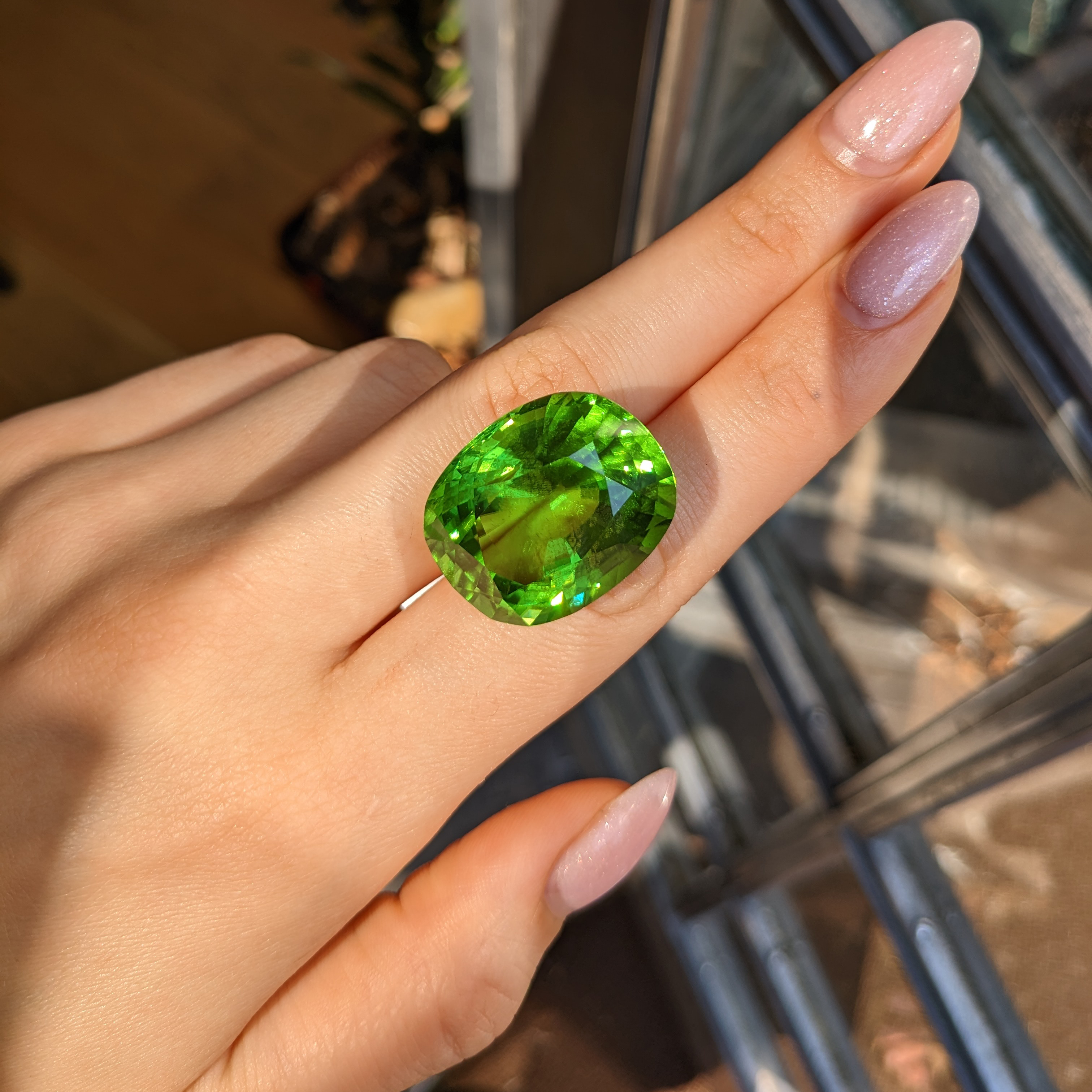
| 63.21 ct Pakistani peridot (K27635) | 63.21 ct cushion | Pakistan | Green (Lime Green), Vivid | Very Very Slightly Included | No Enhancement | 26.69 × 21.51 × 16.12 |
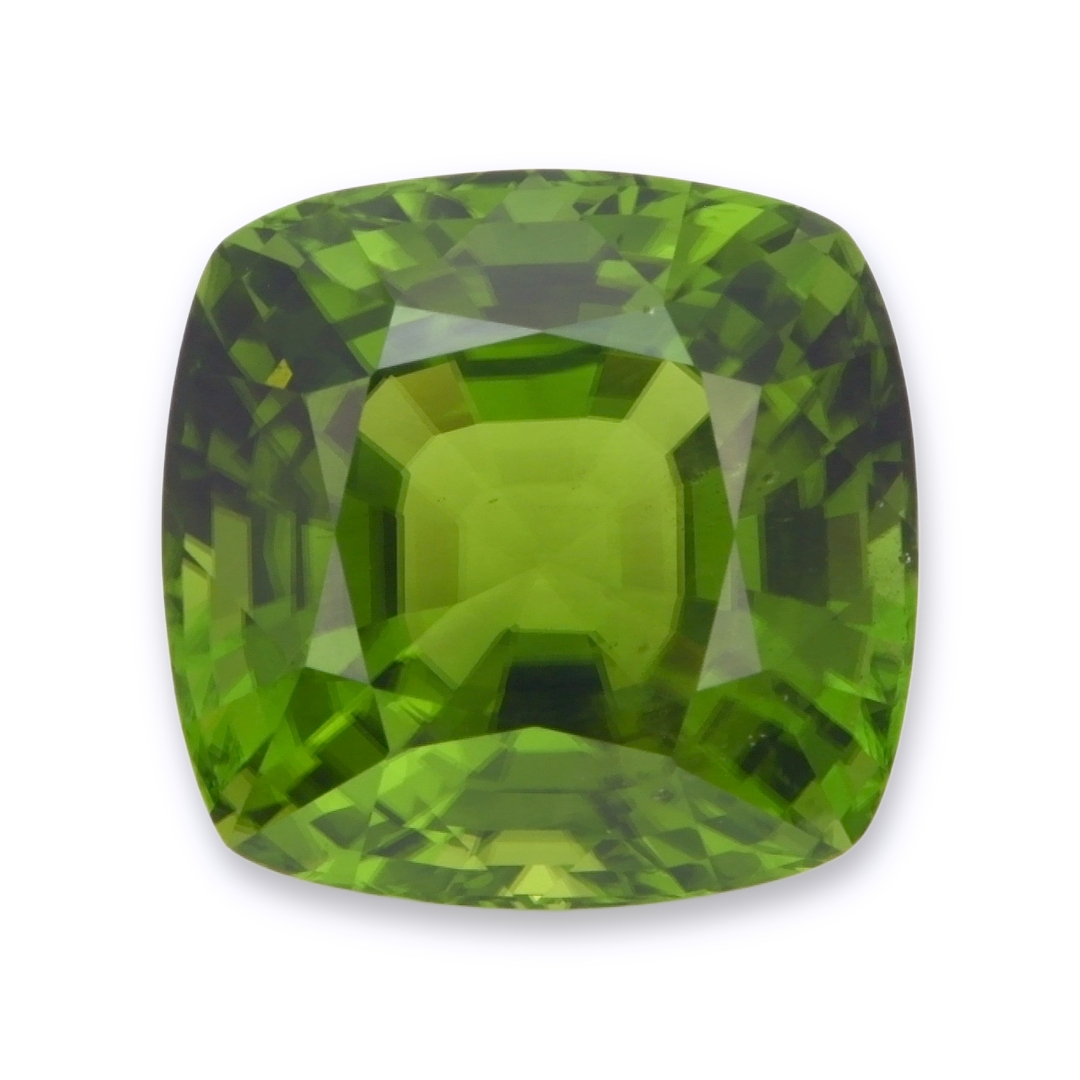
| 44.98 ct Pakistani peridot (K27636) | 44.98 ct cushion | Pakistan | Green (Lime Green), Intense | Very Very Slightly Included | No Enhancement | 20.52 × 20.01 × 14.53 |
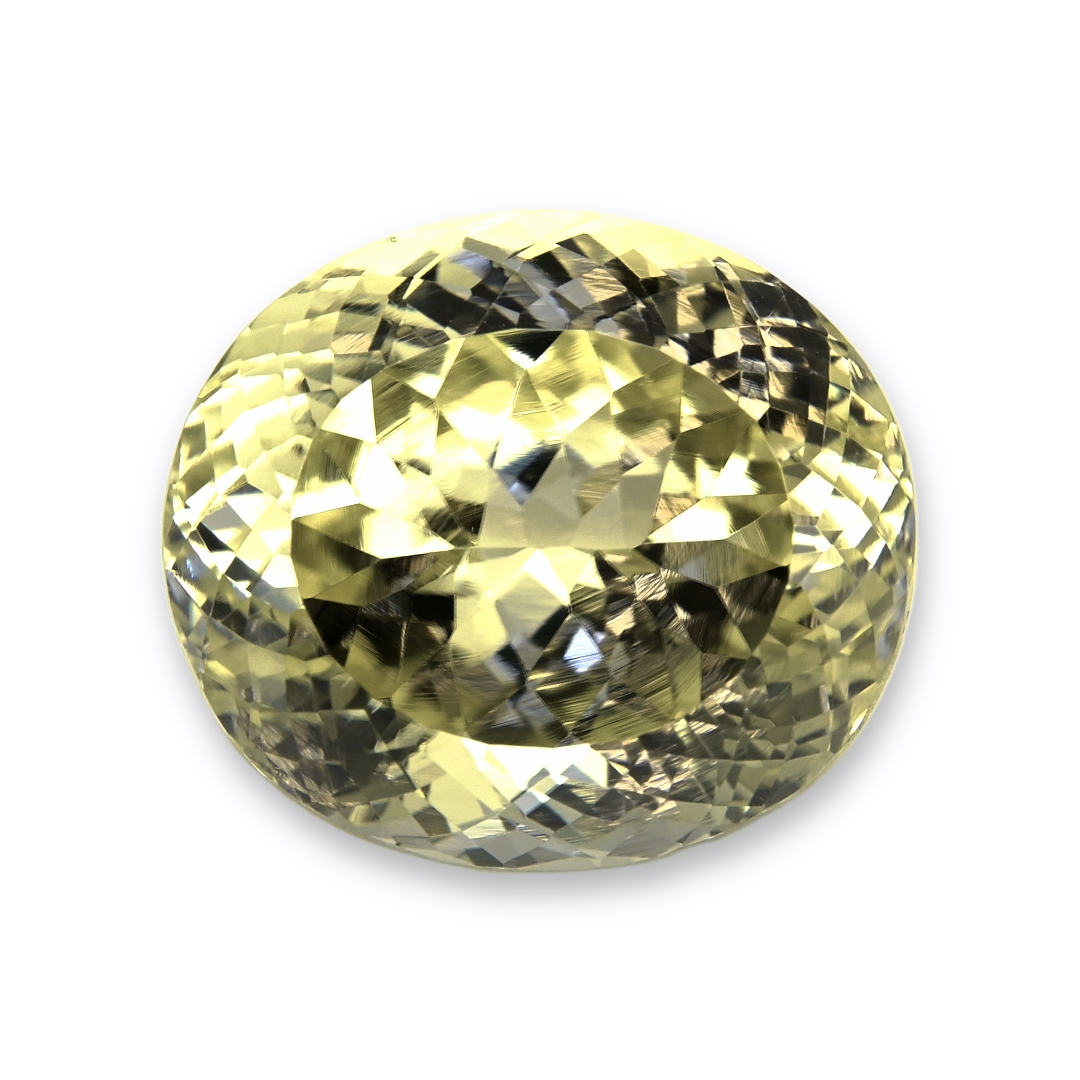
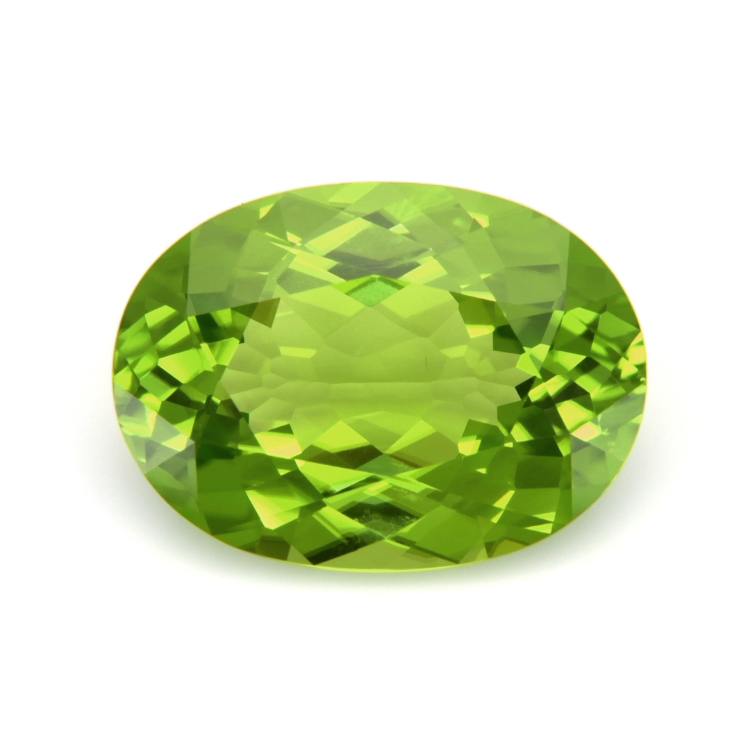
| 31.68 ct Burmese peridot (K24597) | 31.68 ct oval | Burma (Myanmar) | Yellowish Green, Intense | Very Very Slightly Included | No Enhancement | 19.91 × 17.47 × 13.03 |
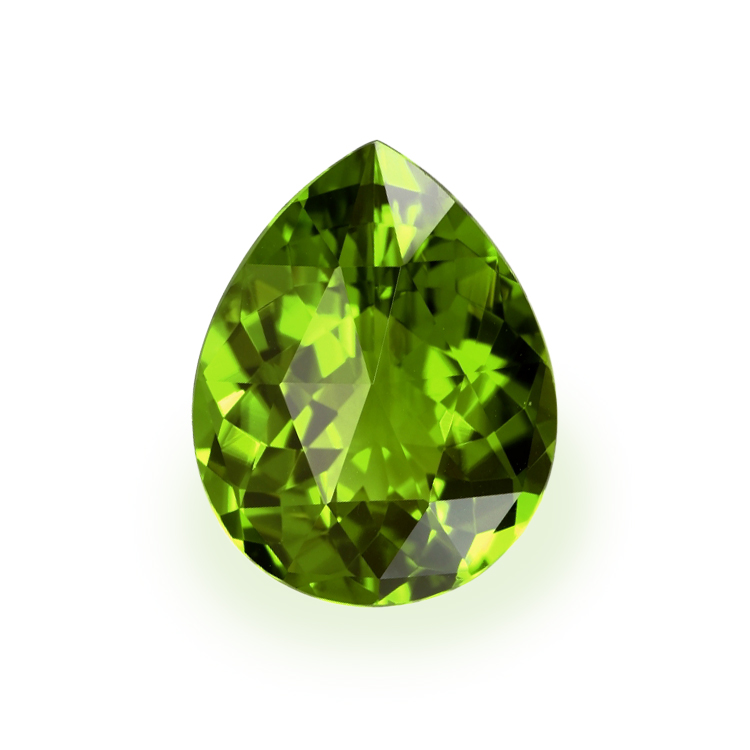
| 25.68 ct pear peridot (K17532) | 25.68 ct pear | Burma (Myanmar) | Green (Lime Green), Intense | Eye Clean | Heat Treated | 22.90 × 17.80 × 10.20 |
| 18.45 ct oval peridot (K16783) | 18.45 ct oval | Burma (Myanmar) | Green (Lime Green), Intense | Eye Clean | Heat Treated | 20.25 × 14.75 × 8.48 |
Pakistani Peridot With No Enhancement
Our 63.21 ct (K27635) and 44.98 ct (K27636) peridots are both cushion cuts from Pakistan listed as Lime Green with no enhancement.
Peridot From Burma (Myanmar)
Our 31.68 ct oval (K24597) is Yellowish Green with no enhancement. The 25.68 ct pear (K17532) and 18.45 ct oval (K16783) are both Eye Clean and listed as heat treated.
How Do I Care for Peridot?
Peridot is about 6.5 to 7 on the Mohs scale. That is durable enough for jewelry, but it is softer than sapphire or diamond and can scratch. Avoid hard knocks, acids and sudden temperature changes, clean it with lukewarm soapy water, and store it apart from harder gems. Earrings and pendants are the safest everyday choices, and rings are best for careful wear.
For more on how birthstones are chosen, see The Psychology of Birthstones, and for the three December stones, read December Birthstones. Browse all natural peridot.
Frequently Asked Questions
What is peridot?
It is the gem-quality variety of olivine, always green, and one of the birthstones for August.
What is the difference between peridot and emerald?
Peridot is olivine, colored by iron, usually yellowish to lime green, 6.5 to 7 on the Mohs scale and often eye clean. Emerald is beryl, colored by chromium or vanadium, a deeper green, 7.5 to 8 on the Mohs scale, almost always included and much more expensive.
What are the August birthstones?
Peridot, spinel and sardonyx. Spinel was added in 2016.
Is peridot really found in meteorites?
Yes. Olivine crystals occur in pallasite meteorites, and gem-quality peridot has been cut from them.
What color is peridot?
Yellowish green to a rich lime or olive green. The shade depends on the iron content.
Where does peridot come from?
Pakistan, Myanmar, China, Arizona, Vietnam, Tanzania and the historic island of Zabargad in Egypt, among others.
Is peridot durable?
It is 6.5 to 7 on the Mohs scale, so it is suited to jewelry with care.
Is peridot expensive?
No, compared with most precious gems. On our site peridot starts at about $20, and most stones cost about $30 to $460 per carat; large showpiece stones cost more per carat.
Is peridot treated?
Some peridot is heat treated and some has no enhancement. Our listings state which; two of the stones above are listed as heat treated.
Sources: GIA: Peridot; GIA: August birthstones; American Gem Society: August birthstones; GIA: Emerald; prices from naturalgemstones.com, checked 12 November 2026.