
- Pair13
- Reports3
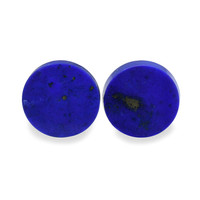
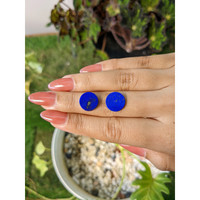
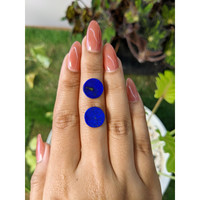
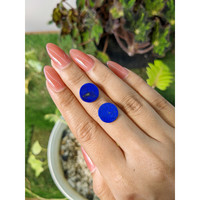
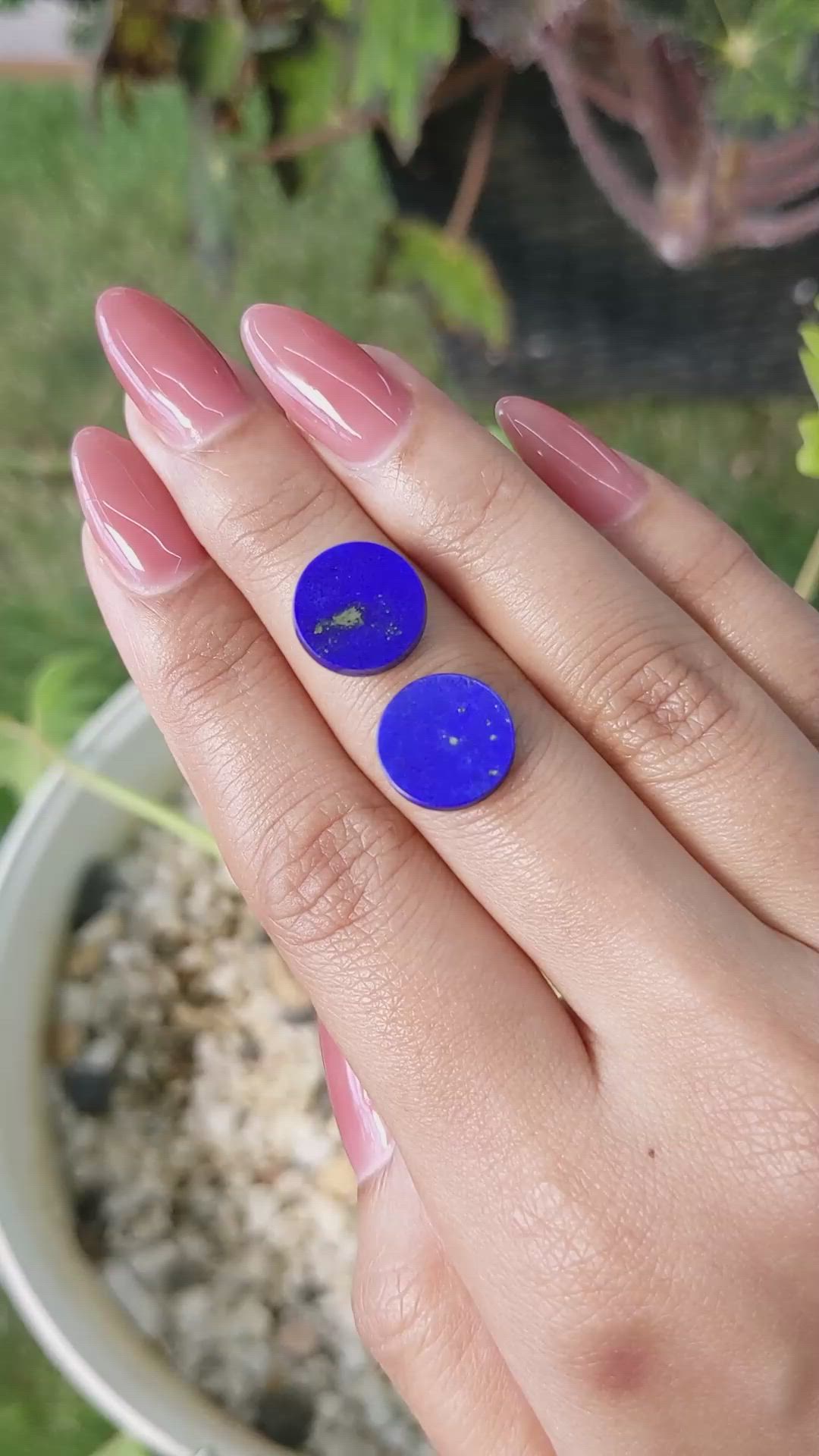
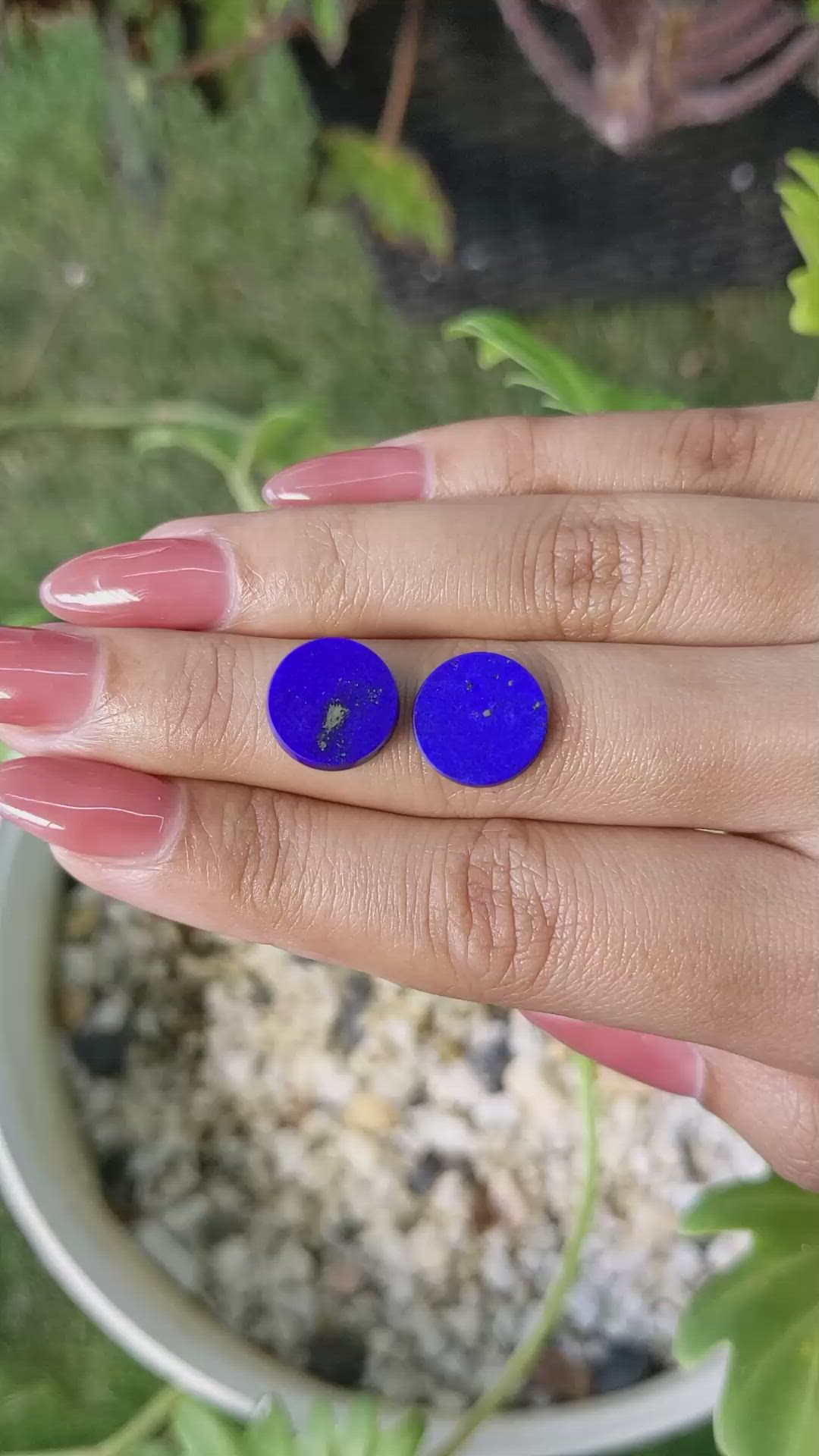
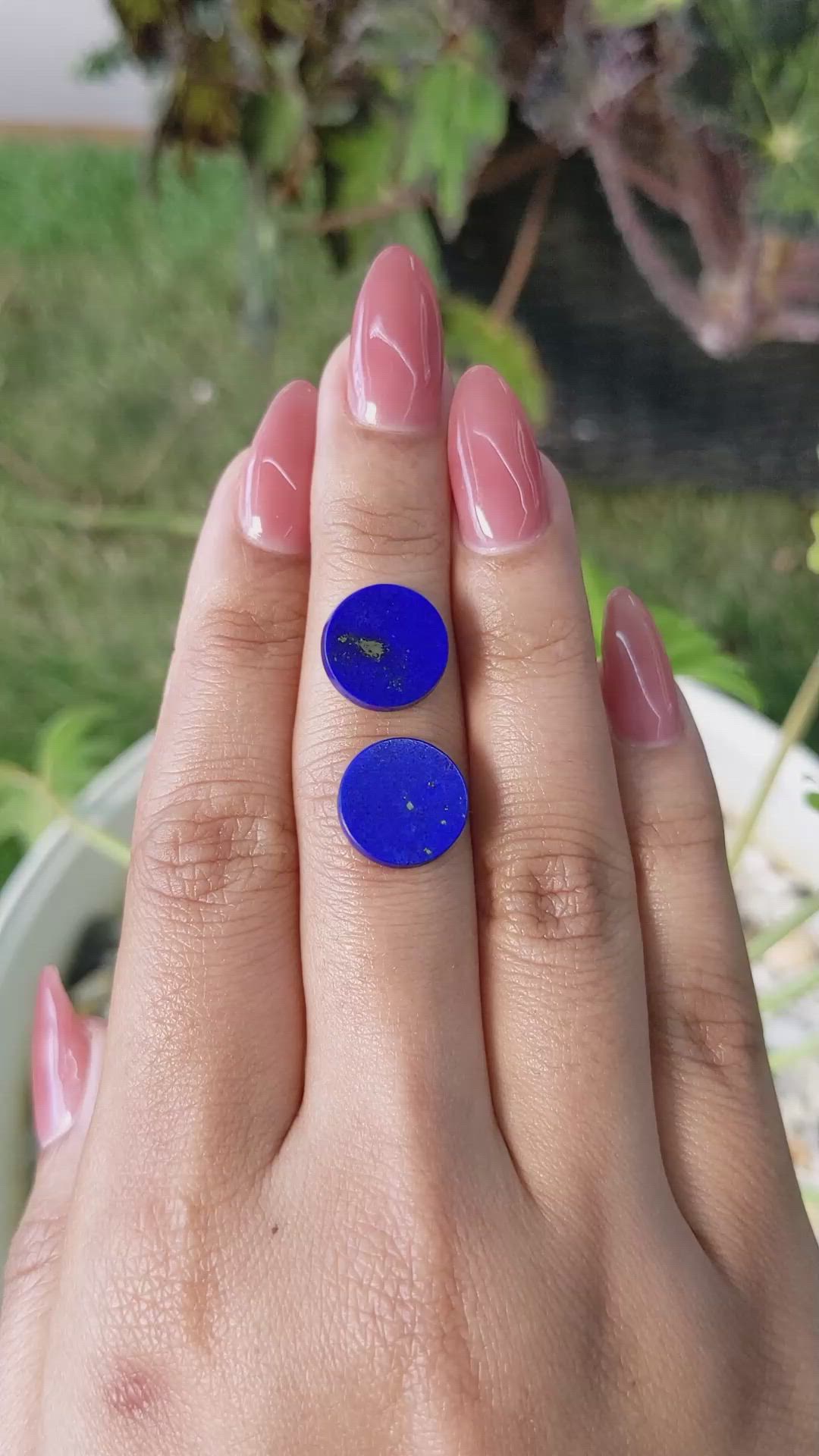
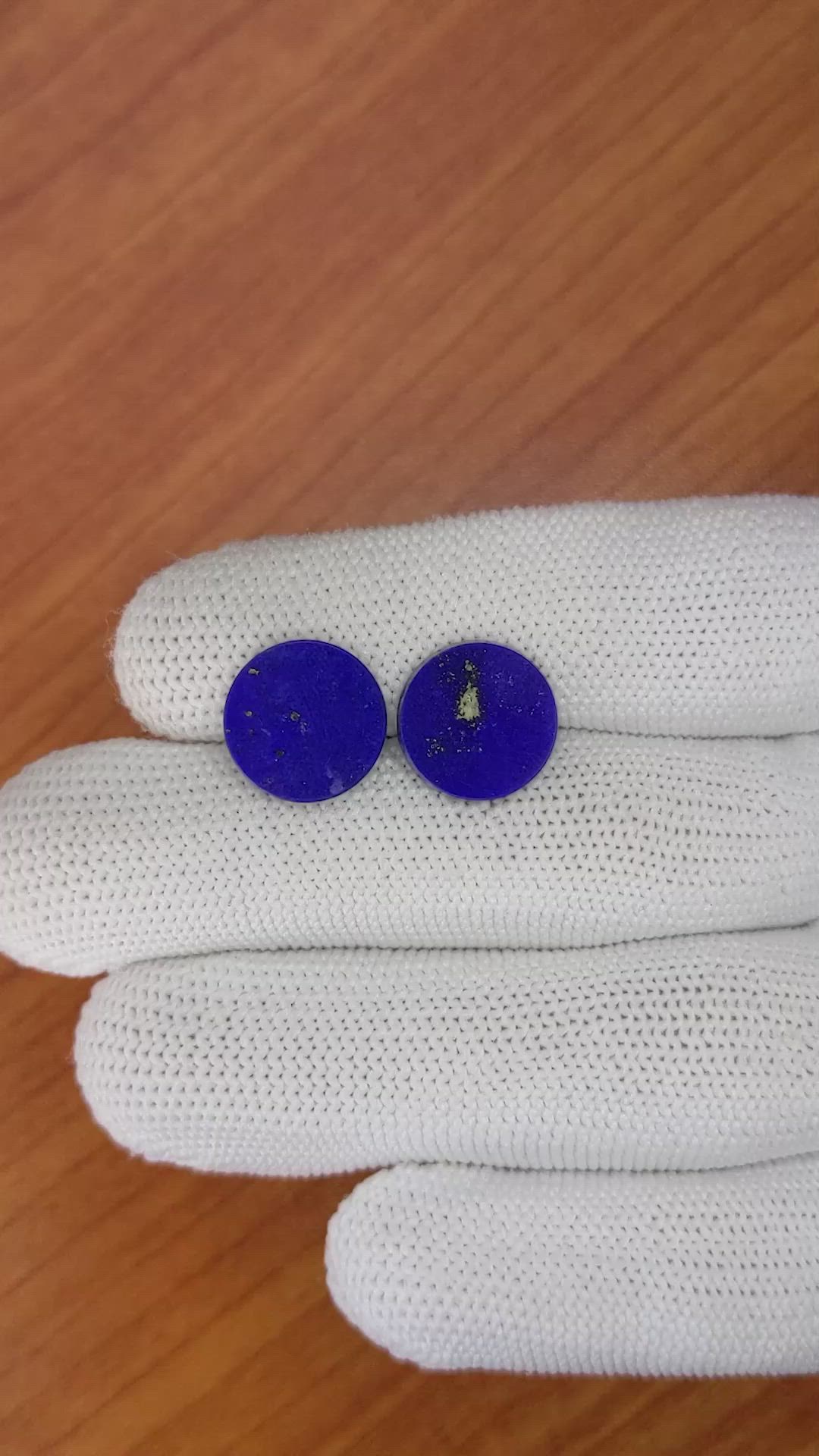

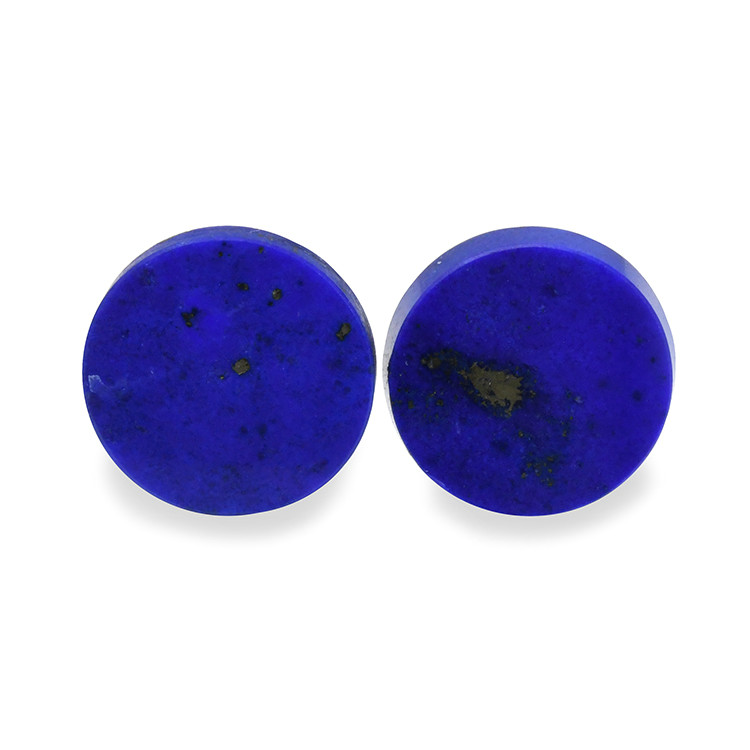
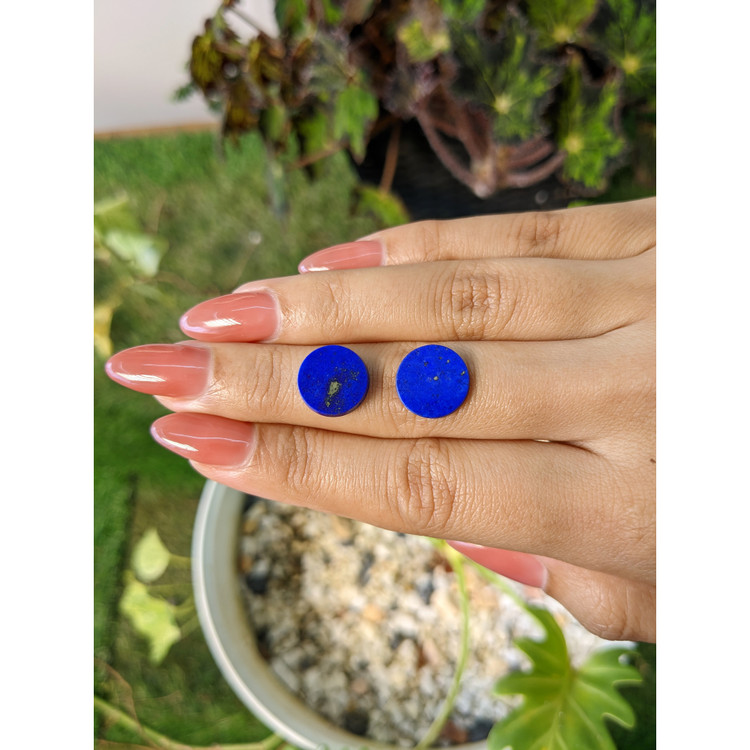
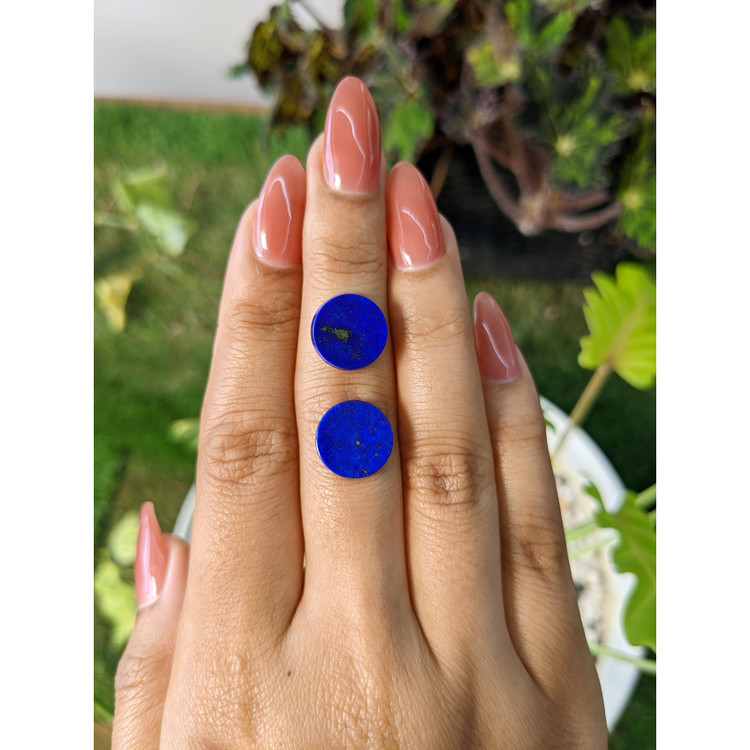
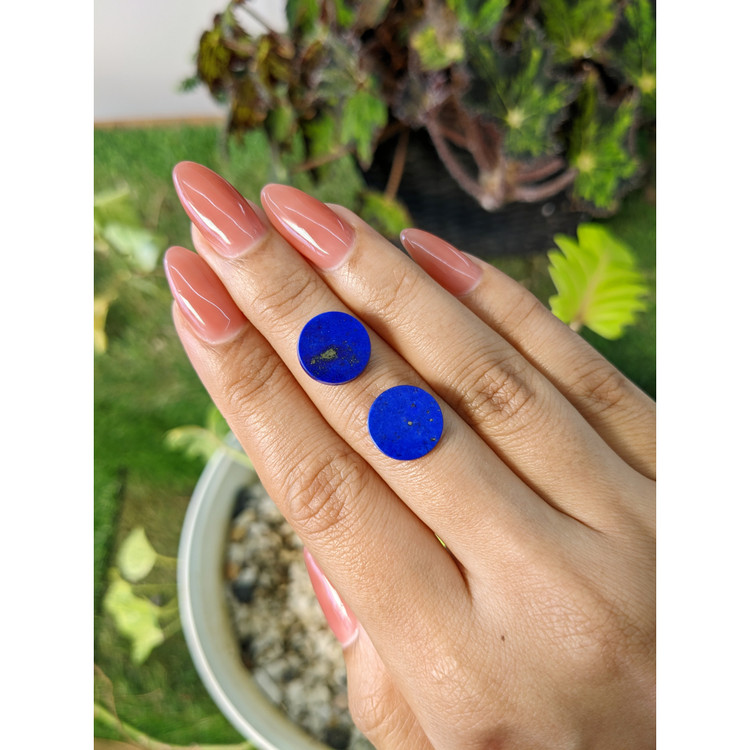

7.01 Ct.Tw.Total Carat Weight Cabochon Lapis Pair from Afghanistan
This pair of stones is available to ship now
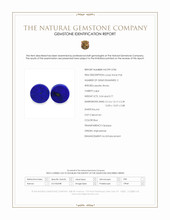
Stone type: | Lapis | Lapis |
|---|---|---|
Item ID: | PR12784 | PR12784 |
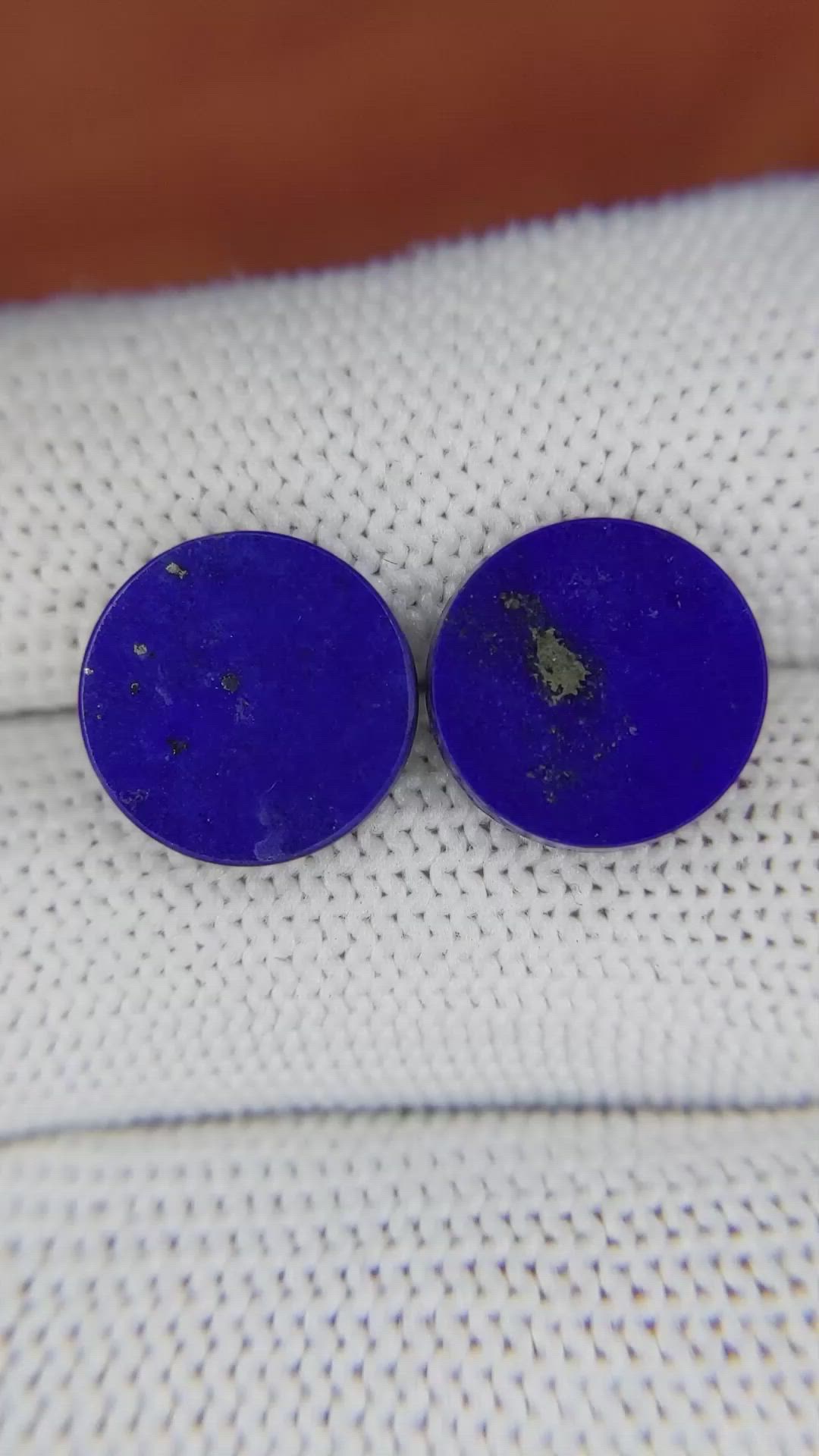
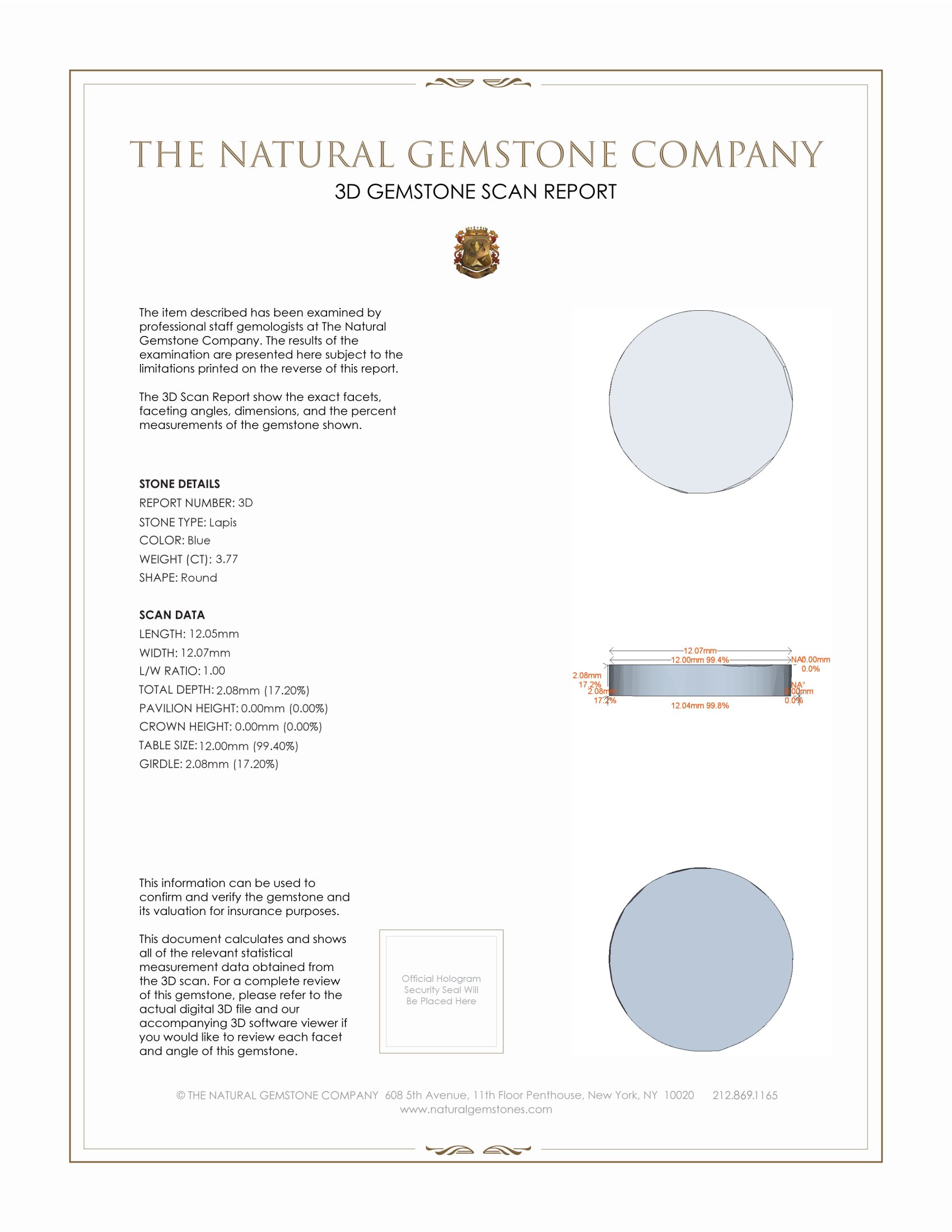
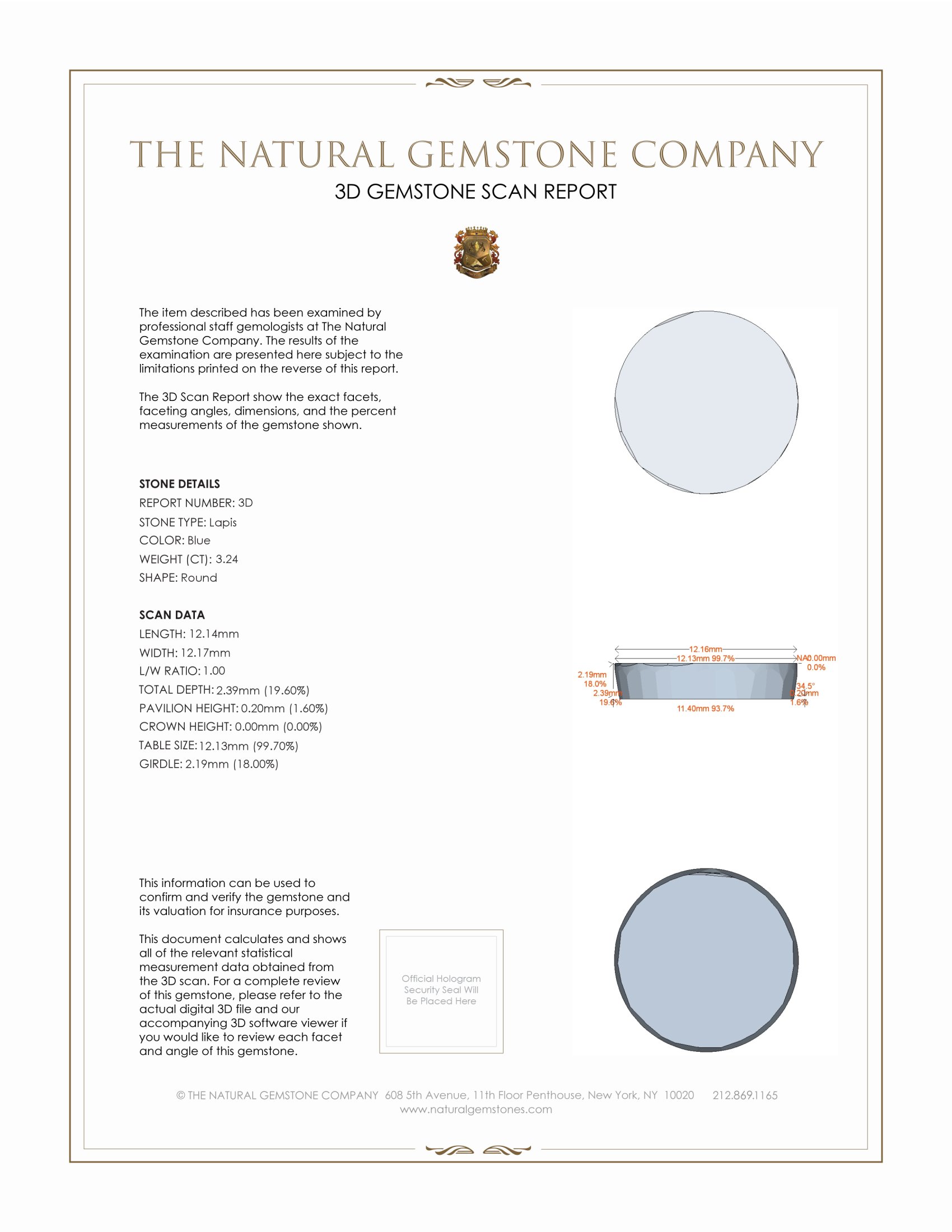
Dimensions (MM): help | Length: 12.14 Width: 12.17 Height: 2.39 | Length: 12.05 Width: 12.07 Height: 2.08 |
Weight: | 3.24 Ct. | 3.77 Ct. |
Color: help | Blue | Blue |
Color intensity: help | N/A | N/A |
Clarity: help | Not Applicable | Not Applicable |
Shape: help | Round | Round |
Cut: | Cabochon | Cabochon |
Cutting style: | Cabochon | Cabochon |
Enhancements: help | No Enhancement | No Enhancement |
Origin: help | Afghanistan | Afghanistan |
Per carat price: help | $12 | $12 |
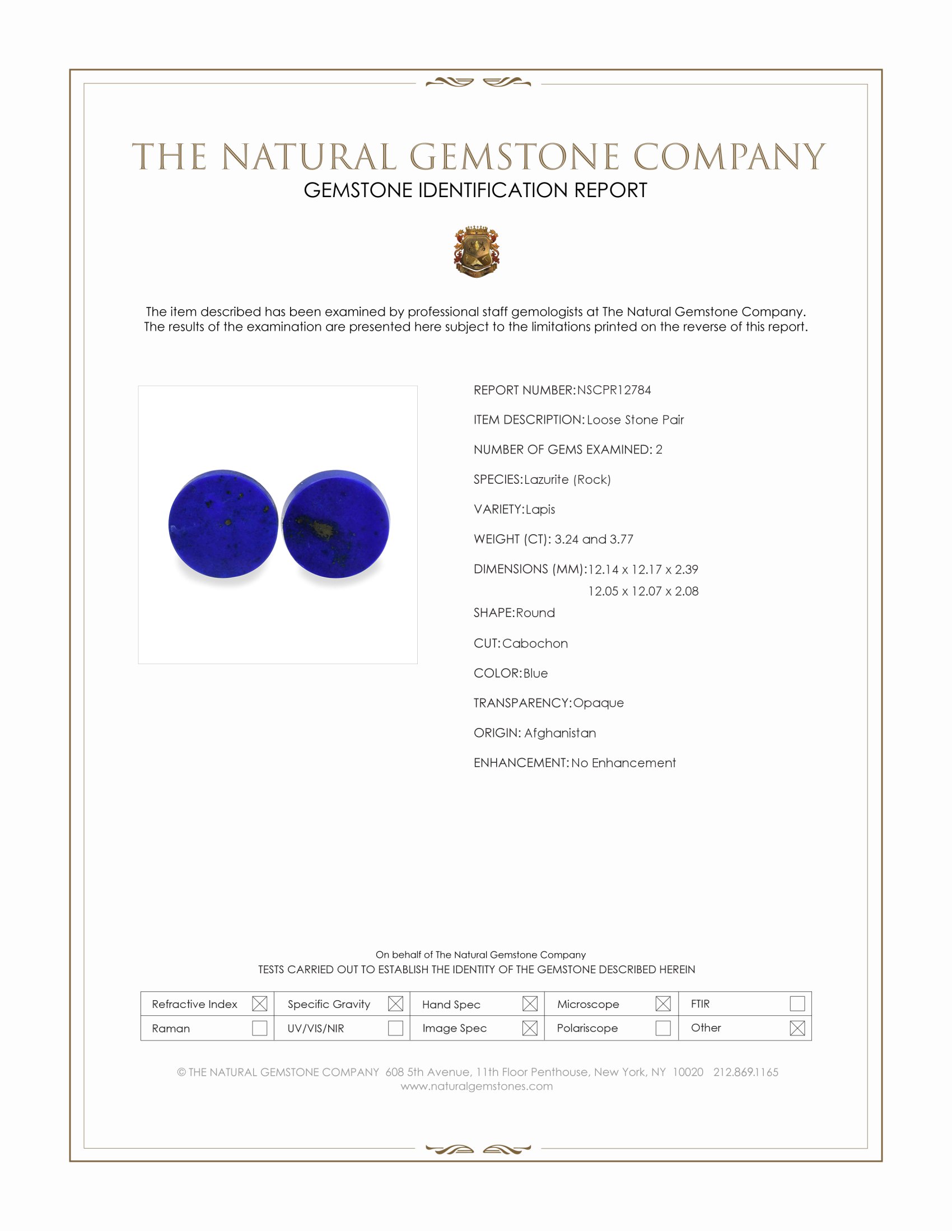
This pair of beautiful opaque lapis offers a rare combination of presence and purity, presented by The Natural Gemstone Company. The two stones weigh 3.24 carats and 3.77 carats respectively, and each is cut into a round shape in cabochon form. Their measured dimensions are 12.14 x 12.17 x 2.39 mm for the 3.24 carat piece, and 12.05 x 12.07 x 2.08 mm for the 3.77 carat piece. The cutting style is cabochon, the color intensity is not applicable in the way it is for transparent gems, and both stones display an excellent polish. There has been no enhancement, making these lapis fully natural from Afghanistan, a region historically celebrated for producing some of the world’s most cherished blue lapis. As a matched pair these cabochons are ideal for a set of earrings, or for a designer who wants symmetry and a commanding blue focal point in a necklace or brooch.
To place these lapis among the famous gemstones of history is to highlight a different kind of greatness. The Hope Diamond and other famed diamonds are celebrated for brilliance and rarity, while the Star of India is noted for size and the unusual phenomenon of asterism. Historical lapis from Afghanistan has a different pedigree, one that stretches back to ancient Mesopotamia and Egypt where lapis was ground into ultramarine pigment and inlaid into royal objects, and from there to the Renaissance studios where ultramarine became the color reserved for the most sacred and expensive motifs. Unlike the singular spectacle of a named diamond, lapis carries a cultural and artistic resonance, a color that has defined religious icons, crowns, and masterpieces. These two stones echo that lineage, offering the hospitable depth of blue that made lapis both a pigment and a jewel of kings.
From a gemological and aesthetic perspective these cabochon lapis present advantages that set them apart from many more commonly marketed blue gems. Transparent sapphires and tanzanites rely on light return and faceting to create fire and scintillation. These lapis are opaque, and they rely on surface color, polish, and form to deliver beauty. The cabochon cut is the traditional way to honor lapis, centering the eye on a smooth surface and sustained color rather than flash. This approach is similar to how historic collectors valued jade or ancient intaglios, appreciating surface sheen and uniformity. Compared to heat treated or fracture filled stones, these lapis are unenhanced, which means the color and surface you see are honest and stable. For clients who value natural materials and straightforward authenticity, these cabochons outperform many treated alternatives in value and peace of mind.
The provenance from Afghanistan is an important factor in the character and desirability of these pieces. Afghan lapis has been prized since antiquity for its deep blue that combines complexity and sobriety, and buyers who understand origin know that material from this source often carries the visual hallmarks that connoisseurs seek. The matched dimensions and close weights create a harmonious pair that will sit evenly in earrings or opposite sides of a design, a practical advantage that faceted stones with variable optical behavior cannot always guarantee. The excellent polish enhances the sense of depth and smoothness, giving the surface an almost luminous quality under varied lighting, a quality different from the sparkle of faceted gems yet equally compelling in its own register.
For those deciding between investing in a famous type of gemstone and acquiring an exceptional lapis pair, consider the context of use and the story you wish to tell. A famed diamond or named museum gem offers provenance and headline value, but that same fame carries a price tag and a very specific optical identity. These Afghan cabochon lapis offer an accessible route to museum grade color and historical lineage, with the added benefits of matchable sizes, no enhancements, and the tactile, wearable beauty that cabochons deliver. At The Natural Gemstone Company we present these stones as both aesthetic statements and reliable materials for fine jewelry, recommended for collectors, designers, and anyone who wishes to own a piece of the blue that has colored kings and artists for millennia.


